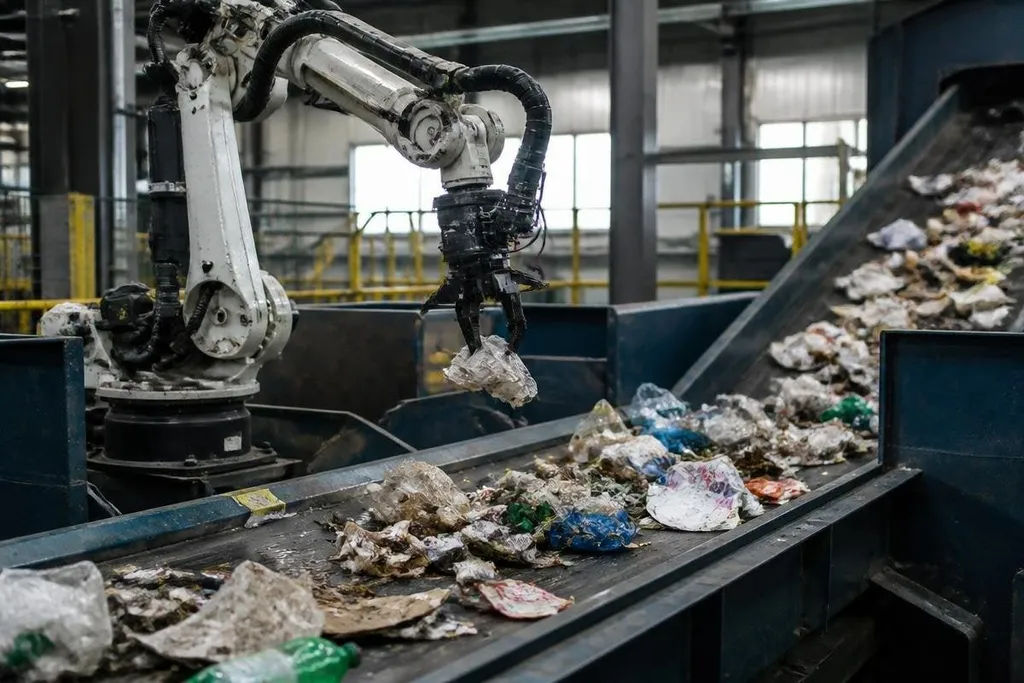
A waste robot has to sort objects that arrive dirty, damaged, and in many shapes. That makes the useful test simple: can it identify an item, pick it up, and place it in the right stream without slowing the facility?
- Better robots will need reliable picking, clear error handling, and safe work beside people.
- The main proof is site data: what the robot sorted, how fast it worked, and how often it failed.
- A lab demo says little until a named facility runs the system on normal waste.
The job is harder than picking boxes
Warehouse robots often work with known products, fixed shelves, and repeatable routes. Waste robots face crushed cartons, tangled plastic, wet material, labels hidden by dirt, and objects that change from one load to the next.
A robot needs a camera or another sensor to find an item. Its software then estimates the item’s shape and position before a gripper picks it up. That handoff matters because a small error can send recyclable material into the wrong bin or stop the line while a person clears it.
The robot also needs to judge when it should not pick. A battery, sharp metal part, or sealed container may need a different process from paper or packaging. Good sorting depends on that refusal step as much as the successful picks.
What builders are trying to improve
The race covers several parts of the same work. A better camera can help the robot see objects, but vision alone cannot fix a gripper that crushes soft packaging or loses objects with wet surfaces.
Some systems use robotic arms above a conveyor. Others may move through a site and collect material from bins. The design changes the task: a conveyor arm must keep pace with incoming waste, while a mobile robot must handle routes, people, doors, and changing floor conditions.
Software can also learn from mistakes. If the system records a failed pick and the item type, an operator can adjust the model or change the gripper. That process still needs checks, since a robot that sorts one facility’s waste well may perform poorly at another site.
The proof buyers should ask for
Public claims need a clear task and a clear comparison. “Better sorting” has little meaning without the material type, the line speed, and the error rate beside it.
A useful report would name the facility, state how long the robot ran, and explain what happened when the system could not identify an item. It would also show maintenance time, worker involvement, and the share of material sent to the wrong stream.
That evidence matters when a waste robot leaves a demo and enters a live sorting line. Robot24.com robotics coverage can connect the named machine, site, test date, and measured result behind each report.
No verified evidence pack is available for this topic here, so a company ranking would be guesswork. The safer view is to compare published trials and ask what each trial leaves out.
Where the limits remain
Waste streams change with weather, local habits, collection rules, and the source of the material. A system trained on clean packaging may need more work when food residue or mixed waste enters the line.
People still matter when objects are unsafe, badly placed, or outside the robot’s training data. That does not make automation pointless. It sets the real task: reduce repeated picking work while keeping people in control of exceptions.
The price also needs a wider check than the robot itself. A buyer may need a new conveyor, guarding, software support, training, and space for rejected items.
A lower machine price can lose its value if the site needs major changes before the first shift.
A practical buying checklist
Use these questions before comparing systems:
- Name the waste stream: Ask which materials the robot can sort today, not which materials the maker plans to support.
- Check site proof: Look for a named facility, run length, item count, and measured sorting error.
- Measure human work: Record who clears jams, handles unsafe objects, and checks the rejected stream.
- Price the full setup: Add conveyors, guards, grippers, software, training, repairs, and power.
- Test failure cases: Include wet items, tangled material, hidden labels, and objects the system has not seen before.
I’d judge a waste robot by its rejected items and service log before its best video clip.
The next useful proof is a public trial with a named site, a measured sorting rate, and clear data on failed picks. Until builders publish those figures, the global race is easier to describe than to rank.